
Having Trouble With Loose Dentures? Implant-Supported Dentures May Be More Affordable Than You Think
Living with full dentures can be frustrating when they do not feel secure. Many people start with traditional dentures hoping they will be able to eat, speak, laugh, and smile comfortably again. But over time, some patients begin to notice that their dentures slip, rub, rock, or feel less dependable than they hoped.
For adults in Post Falls, Coeur d’Alene, Hayden, Rathdrum, and the surrounding Kootenai County area, loose dentures can affect everyday life. You may avoid certain foods, rely on denture adhesive, feel nervous while talking, or worry that your denture will move when you laugh. Even simple meals with family or friends can become stressful when your dentures do not feel stable.
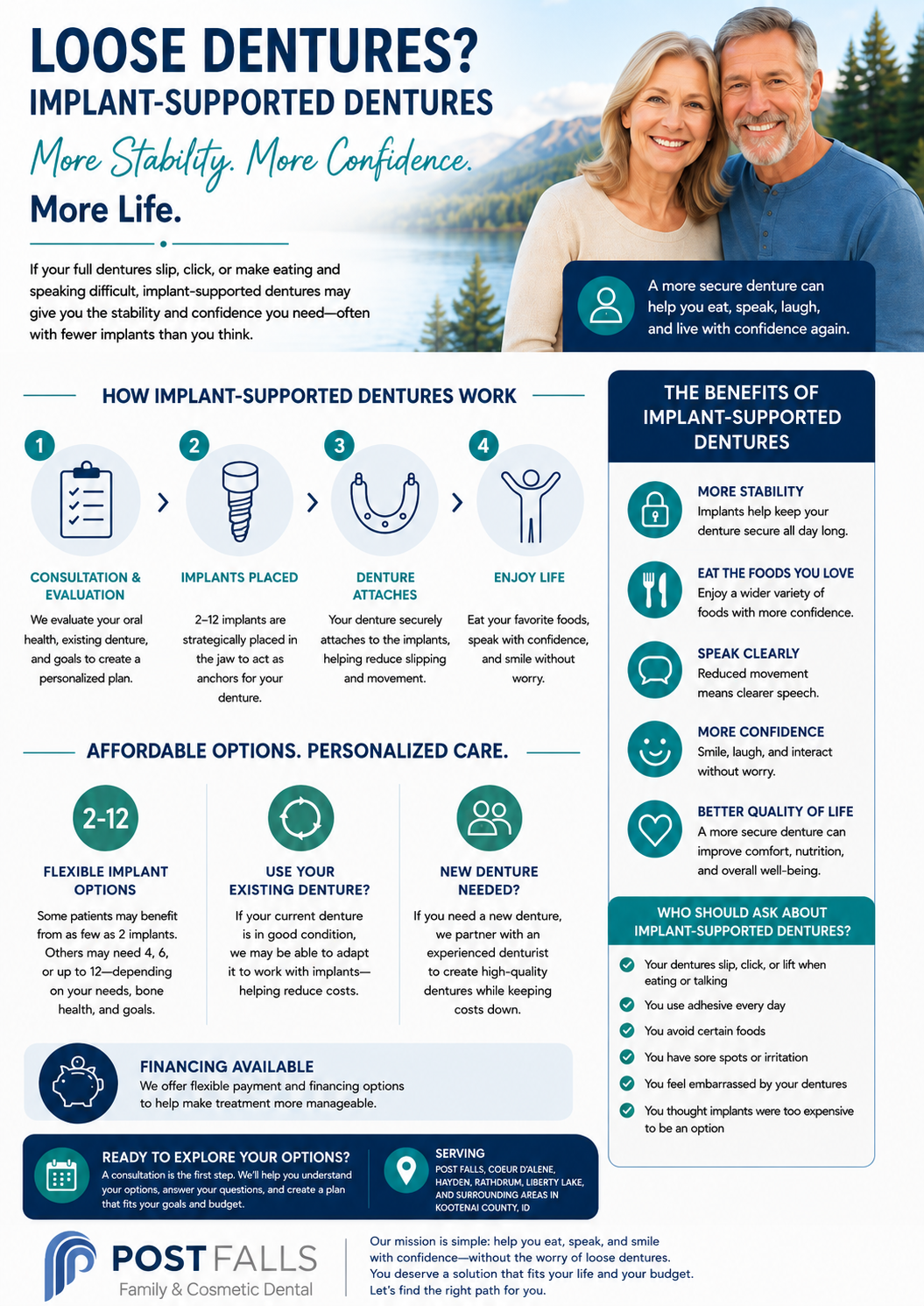
Many people assume the only solution is a full mouth of expensive dental implants, so they never ask about their options. The good news is that implant-supported dentures may be more approachable than many patients realize. Depending on your needs, bone health, denture fit, and goals, Post Falls Family and Cosmetic Dental may be able to discuss options using anywhere from 2 to 12 implants. In some cases, an existing denture may even be evaluated to see if it can be used, which may help reduce cost.
If you have been struggling with full dentures and thought implants were completely out of reach, it may be time to schedule a consultation and learn what is actually possible.
Why Full Dentures Can Become Loose Over Time
Traditional dentures are designed to replace missing teeth and restore the appearance of a complete smile. For many patients, they are a helpful and cost-conscious solution. However, dentures depend heavily on the shape of the gums, jawbone, and surrounding tissues for support.
Your Mouth Can Change After Tooth Loss
After teeth are removed, the jawbone and gum tissue can gradually change shape. As this happens, a denture that once felt comfortable may begin to loosen. This is especially common with lower dentures because the lower jaw has less surface area for suction and support compared with the upper jaw.
When the denture no longer fits as well, patients may notice movement while chewing, sore spots, gum irritation, food getting trapped under the denture, difficulty speaking clearly, or a need for more adhesive.
Loose Dentures Can Affect More Than Eating
A denture that moves can affect confidence. Some patients avoid restaurants, family meals, photos, or social events because they are worried about their denture shifting. Others stop eating foods they enjoy because chewing feels unpredictable or uncomfortable.
This can become more than a dental inconvenience. It can affect nutrition, confidence, relationships, and quality of life.
What Are Implant-Supported Dentures?
Implant-supported dentures are dentures that use dental implants for added stability. Instead of relying only on suction, adhesive, and gum support, the denture connects to implants placed in the jawbone. These implants act like anchors to help the denture feel more secure.
They Are Not Always the Same as Full-Mouth Implants
One common misunderstanding is that every implant solution requires replacing every missing tooth with an individual implant or creating a large fixed implant bridge. That is not always the case.
Implant-supported dentures can often be designed with fewer implants than people expect. Some patients may be candidates for a denture supported by a smaller number of implants, while others may need a more advanced plan with additional implants for greater support.
The number of implants depends on several factors, including bone volume, oral health, whether the upper or lower denture is involved, how much stability the patient wants, and whether the denture will be removable or part of a more fixed solution.
The Goal Is Stability, Comfort, and Confidence
The purpose of implant-supported dentures is to help create a more stable foundation. For many patients, that can mean less slipping, less rocking, better chewing confidence, and less dependence on adhesive.
This can be life changing for people who have felt stuck with loose dentures and assumed there were no realistic options left.
You May Not Need as Many Implants as You Think
One of the biggest barriers for patients is cost. Many people hear the word “implants” and immediately assume treatment will be far beyond their budget. While implant treatment is an investment, not every patient needs the most extensive version of care.
Some Patients May Benefit From Fewer Implants
Depending on the case, some denture stabilization options may use as few as 2 implants. Other patients may benefit from 4, 6, or more implants. In more complex cases, a larger plan involving up to 12 implants may be discussed.
The important point is that implant-supported denture treatment is not one-size-fits-all. The right plan depends on the patient’s goals, health, anatomy, budget, and desired level of stability.
A Consultation Can Help You Understand the Range of Options
Instead of assuming implants are unaffordable, it is better to have an evaluation. A consultation at Post Falls Family and Cosmetic Dental can help determine whether you may be a candidate for a smaller implant-supported denture plan, a more advanced implant solution, or another restorative option.
For many patients, simply learning that there may be different levels of treatment can make the process feel less overwhelming.
Can Existing Dentures Be Used With Implants?
In some cases, an existing denture may be evaluated to see if it can be used or adapted as part of an implant-supported denture plan. This is not possible for every patient, but it can be an important cost-saving opportunity when the denture is in good condition and clinically appropriate.
Why This Can Help With Affordability
Starting over with a completely new denture can add to the total cost of treatment. If the current denture fits well enough, has the right structure, and can be safely modified, using it may help make treatment more manageable.
This is one reason a consultation is so important. A patient may assume they need to replace everything, when the first step may simply be evaluating the denture they already have.
What the Dental Team Will Look At
During an evaluation, the dental team may look at the fit, bite, age, wear, shape, strength, and overall condition of the denture. They also need to evaluate the gums, jawbone, oral health, and implant placement options.
If the current denture is not a good candidate, that does not mean implant-supported dentures are off the table. It simply means a new denture may be needed as part of the plan.
What If You Need New Dentures?
Some patients will need new dentures before moving forward with implant support. This may be the case if the existing denture is worn, poorly fitting, damaged, unstable, or not designed in a way that can work with implants.
Coordinated Care Can Help Keep Costs Practical
If new dentures are needed, Post Falls Family and Cosmetic Dental may be able to coordinate with a denturist to help keep the process cost-conscious. This can be helpful for patients who need a new appliance but are also trying to manage the total investment of implant-supported treatment.
The goal is not to push every patient into the most expensive option. The goal is to find a treatment path that improves comfort and function while respecting the patient’s budget and long-term needs.
A Better Denture Can Still Make a Difference
Even before implants are placed, a better-fitting denture can improve comfort. When combined with implant support, the result may be even more stable and functional. For patients who have been dealing with slipping, rubbing, or frustration for years, this can make a meaningful difference in daily life.
Who Should Ask About Implant-Supported Dentures?
You may want to ask about implant-supported dentures if your full denture moves when you eat, slips when you talk, causes sore spots, or makes you feel nervous in public. You may also be a good candidate for a consultation if you rely heavily on denture adhesive or avoid foods because chewing feels difficult.
Common Signs It Is Time to Ask for Help
Patients often wait too long because they assume loose dentures are just part of life. However, there are several signs that it may be time to ask about your options.
You may benefit from an evaluation if your denture rocks or lifts while chewing, your lower denture feels especially unstable, you avoid steak, apples, corn, salads, or other foods, you feel embarrassed when speaking or laughing, or you have ongoing sore spots from denture movement.
You may also want to schedule a consultation if you have been told in the past that implants were too expensive and have not asked about newer or more flexible options.
This Can Be About Quality of Life
Implant-supported dentures are not only about teeth. They are about helping people feel more like themselves again. Being able to eat more comfortably, speak with confidence, smile without worry, and enjoy social meals can have a major impact on quality of life.
For some patients, stabilizing a denture can feel life changing.
Implant-Supported Dentures vs. Traditional Dentures
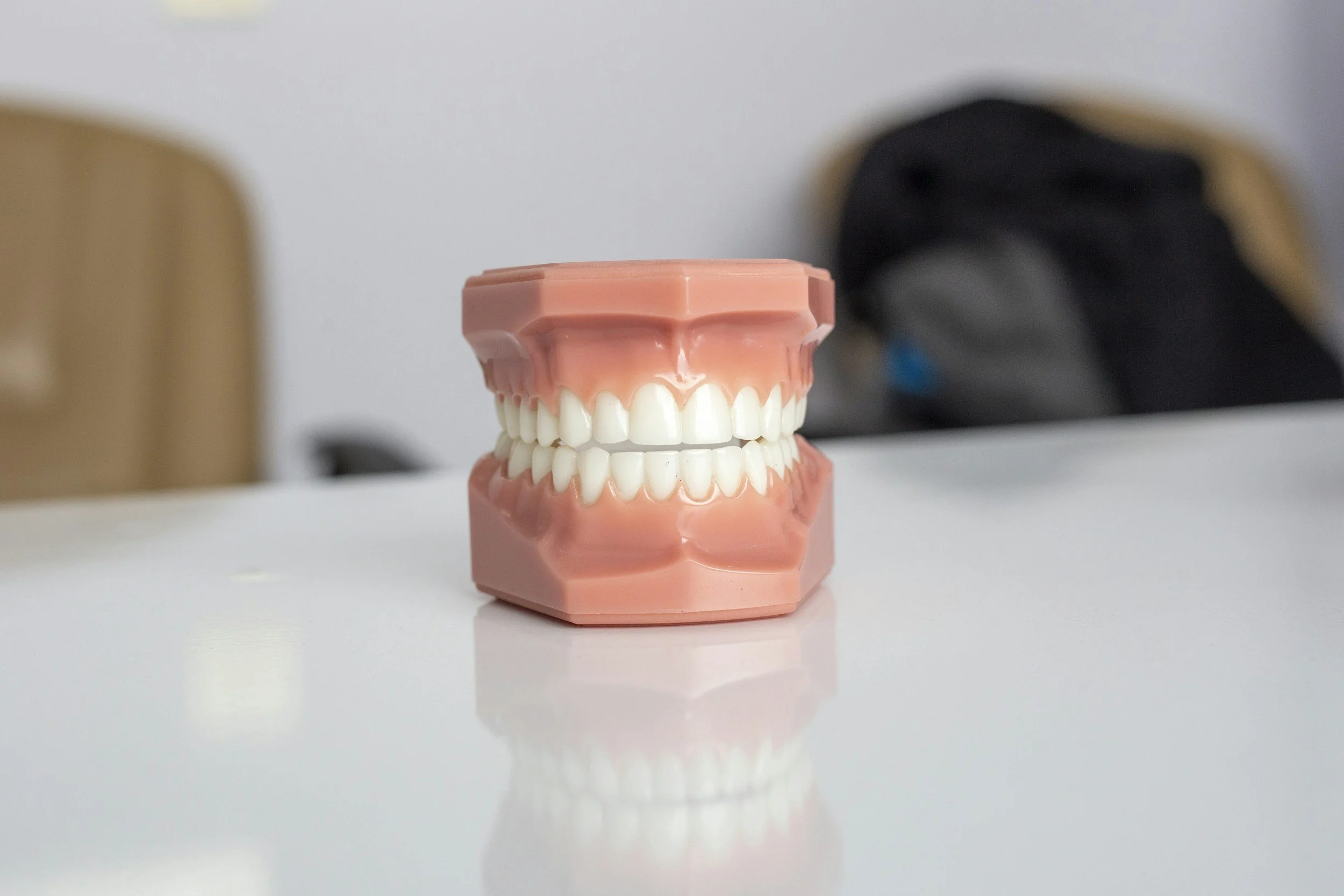
Traditional dentures sit on top of the gums and rely on fit, suction, muscle control, and sometimes adhesive. Implant-supported dentures connect to implants for added retention and support.
Traditional Dentures
Traditional dentures may be a good option for patients who need a more affordable tooth replacement solution and are able to function comfortably with them. They are removable, can replace a full arch of missing teeth, and may work well when the fit is stable.
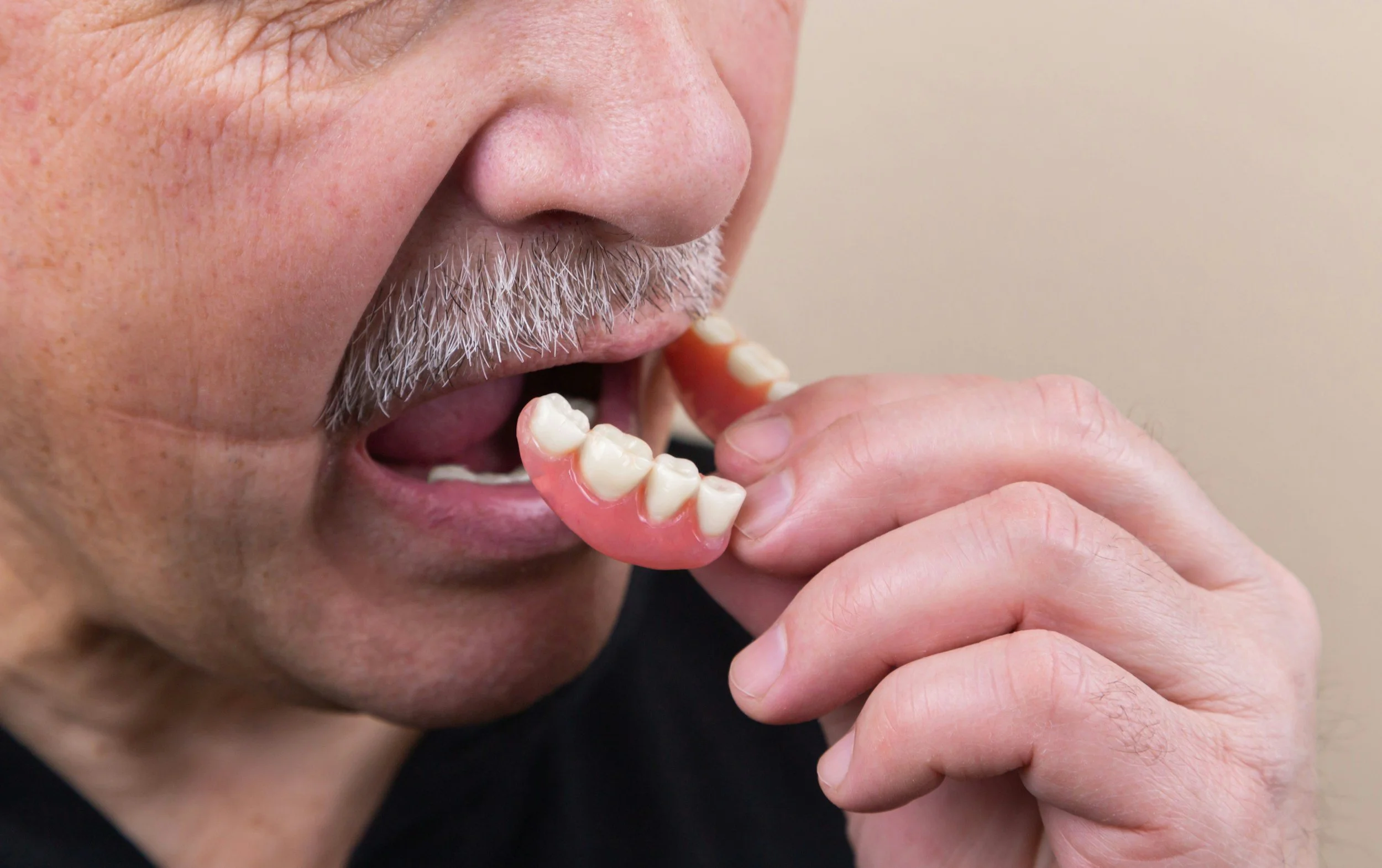
However, traditional dentures can become loose over time as the mouth changes. They may also require adjustments, relines, adhesives, or replacement.
Implant-Supported Dentures
Implant-supported dentures are designed to offer more stability than traditional dentures. Depending on the case, they may snap onto implants or be designed as part of a more fixed solution. They can help reduce movement and improve confidence while eating and speaking.
The best option depends on your oral health, budget, expectations, and the condition of your current denture.
Are Implant-Supported Dentures Affordable?
Affordability depends on the treatment plan, but many patients are surprised to learn that there may be more than one path. The total cost can vary based on how many implants are needed, whether existing dentures can be used, whether new dentures are required, whether bone support is adequate, and what type of final denture design is recommended.
Why the Cost Can Vary
A patient who only needs a few implants to help stabilize an existing denture may have a very different treatment cost than someone who needs extractions, bone grafting, new dentures, and a larger implant plan. That is why pricing should be personalized after an evaluation.
This also means patients should not assume they are priced out before they ask. A consultation can help clarify whether there are practical options available.
Financing May Help
Post Falls Family and Cosmetic Dental offers flexible payment and financing options, which may help some patients move forward with treatment in a more manageable way. During the consultation, patients can ask about treatment phases, financing, and which options best fit their needs.
The goal is to help patients understand what is possible before making a decision.
Implant-Supported Dentures in Post Falls and Kootenai County
Post Falls Family and Cosmetic Dental serves patients from Post Falls, Coeur d’Alene, Hayden, Rathdrum, Liberty Lake, and surrounding North Idaho communities. For patients dealing with loose dentures, having local care matters because the process may require multiple visits for evaluation, planning, adjustments, implant placement, denture coordination, and follow-up.
Local Care Makes the Process Easier
If your dentures are already frustrating, traveling far for treatment can add another barrier. Working with a local dental team near Post Falls can make it easier to get answers, attend appointments, and receive ongoing support.
A Restorative Option With Cosmetic Benefits
Implant-supported dentures are primarily about function, comfort, and stability, but they can also improve confidence in your smile. When dentures feel secure and look natural, patients may feel more comfortable in conversations, photos, and social settings.
For that reason, implant-supported dentures connect to both restorative dentistry and cosmetic confidence. They help restore function while also helping patients feel better about their smile.
What to Expect at an Implant-Supported Denture Consultation
A consultation does not mean you are committing to treatment. It is the first step in understanding your options.
Reviewing Your Current Denture
If you already have dentures, bring them to the appointment. The dental team can evaluate how they fit, how they function, whether they are worn or damaged, and whether they may be usable as part of an implant-supported plan.
Evaluating Your Oral Health
The team will also evaluate your gums, jawbone, bite, oral health, and overall treatment needs. This may include imaging to better understand implant placement options and bone support.
Discussing Treatment Options
After the evaluation, the team can talk through possible options. This may include using your current denture if appropriate, creating a new denture, placing a smaller number of implants, discussing a larger implant plan, or coordinating with a denturist if a new denture is needed.
The goal is to help you understand your options clearly so you can make an informed decision.
Do Not Assume You Have to Live With Loose Dentures
Loose dentures can make everyday life harder than it needs to be. If your dentures slip, rub, move, or keep you from eating the foods you enjoy, it may be time to ask whether implant-supported dentures could help.
You may not need the most expensive implant option to improve stability. Depending on your situation, Post Falls Family and Cosmetic Dental may be able to discuss a range of options, including treatment plans with fewer implants, using an existing denture when appropriate, or coordinating with a denturist to help keep costs more manageable.
If you live in Post Falls, Coeur d’Alene, Hayden, Rathdrum, Liberty Lake, or the surrounding Kootenai County area, you do not have to keep guessing. A consultation can help you understand whether implant-supported dentures may be a realistic option for your smile, comfort, and quality of life.
Schedule an implant-supported denture consultation with Post Falls Family and Cosmetic Dental to learn whether your current denture can be secured, improved, or replaced with a more stable solution.
Frequently Asked Questions About Dentures
-
Implant-supported dentures are dentures that connect to dental implants for added stability. Instead of relying only on suction, adhesive, and gum support, the denture uses implants as anchors to help reduce movement and improve confidence while eating, speaking, and smiling.
-
Yes, dental implants may help stabilize loose dentures for some patients. The implants can provide support that helps the denture feel more secure. The best way to know if this is an option is to schedule an evaluation.
-
Not always. Some implant-supported denture options may use as few as 2 implants, while others may involve 4, 6, or more depending on the case. Post Falls Family and Cosmetic Dental can evaluate options ranging from 2 to 12 implants depending on your needs, health, bone support, and goals.
-
In some cases, an existing denture may be evaluated to see if it can be used or adapted for implant support. This depends on the fit, condition, age, bite, and structure of the denture. If the current denture is not a good fit, a new denture may be recommended.
-
They may be more approachable for some patients because implant-supported dentures can sometimes use fewer implants than more advanced fixed implant options. Cost depends on your specific treatment plan, including the number of implants, denture needs, oral health, and whether additional procedures are needed.
-
If new dentures are needed, Post Falls Family and Cosmetic Dental may be able to coordinate with a denturist to help keep the process practical and cost-conscious. A consultation can help determine whether your current denture can be used or whether a new one would give you a better result.
-
Patients who struggle with loose dentures, denture adhesive, sore spots, difficulty chewing, or embarrassment from slipping dentures may be good candidates for an evaluation. Oral health, bone support, medical history, and treatment goals all need to be considered before deciding on a plan.
-
Yes. Post Falls Family and Cosmetic Dental is located in Post Falls and serves patients from Coeur d’Alene, Hayden, Rathdrum, Liberty Lake, and surrounding Kootenai County communities.
