
Levels of Sedation Dentistry: Help for Patients With Dental Fear in Post Falls
Dental fear is more common than many people realize. Some patients feel nervous before routine cleanings. Others avoid dental visits for years because of past experiences, sensitive teeth, fear of pain, a strong gag reflex, embarrassment, or anxiety about what the dentist may find.
For adults in Post Falls, Coeur d’Alene, Hayden, Rathdrum, Liberty Lake, and the surrounding Kootenai County area, avoiding dental care can make small problems more stressful over time. A toothache, broken restoration, gum issue, missing tooth, or cosmetic concern may feel harder to address the longer you delay care.
At Post Falls Family and Cosmetic Dental, sedation dentistry may help patients feel more comfortable during treatment. The goal is not to make patients feel judged or rushed. The goal is to help each person understand their options and receive care in a way that feels safer, calmer, and more manageable.
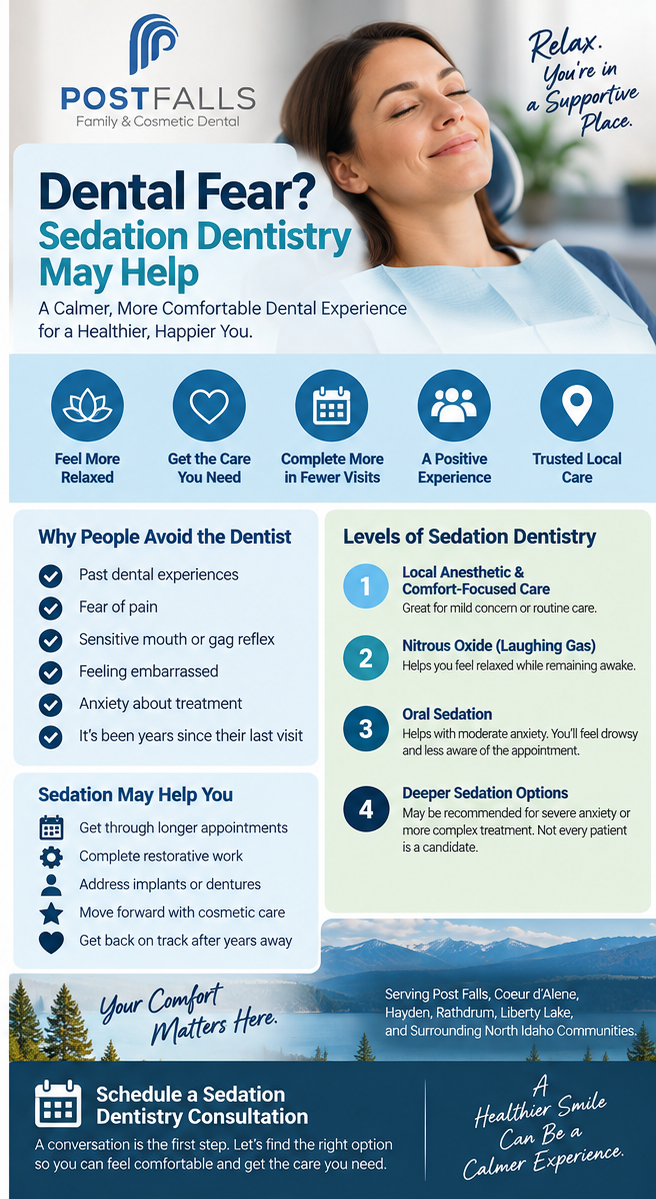
Why People Avoid the Dentist
Patients avoid dental care for many reasons. Some had a painful or embarrassing dental experience in the past. Others have anxiety about needles, sounds, smells, drilling, gagging, or feeling out of control. Some patients worry that they will be criticized because it has been years since their last visit.
Dental Fear Can Create a Cycle
Avoidance often creates a cycle. A patient feels nervous, delays treatment, and then the dental problem becomes more serious. As the problem grows, the appointment feels even more intimidating. This can lead to more avoidance, more discomfort, and more anxiety.
Sedation dentistry can help interrupt that cycle by making care feel more approachable. For some patients, knowing that comfort options are available is enough to finally schedule the appointment they have been putting off.
You Are Not Alone
Dental anxiety is not a character flaw. It is a real concern that many patients deal with. A compassionate dental team should take those concerns seriously and help you talk through what would make the visit easier.
If you are nervous about dental care, the first step can simply be a conversation.
What Is Sedation Dentistry?
Sedation dentistry uses medication or calming techniques to help patients feel more relaxed during dental care. The type of sedation depends on the patient’s health, anxiety level, procedure, and treatment needs.
Sedation Is Not One-Size-Fits-All
Not every patient needs the same level of support. Some patients may only need reassurance, breaks, and local anesthetic. Others may benefit from nitrous oxide, oral sedation, or deeper sedation, depending on the treatment and their medical history.
Choose the right option after reviewing your health, medications, procedure type, and comfort goals.
Sedation Can Help With More Than Anxiety
Sedation may help patients with dental fear, a strong gag reflex, difficulty sitting still, sensitive teeth, complex treatment needs, or multiple procedures to complete. It can also be useful for patients who have delayed care and now need a longer appointment.
Level 1: Local Anesthetic and Comfort-Focused Care
The first level of comfort support is often local anesthetic and a patient-centered approach. Local anesthetic numbs the treated area so dental work can be completed more comfortably.
Best For Mild Concern or Routine Care
Some patients do not need sedation but do need clear communication and reassurance. This may include explaining each step, allowing breaks, using numbing when needed, and helping the patient feel in control throughout the visit.
For patients with mild nervousness, this level of support may be enough.
Level 2: Nitrous Oxide
Nitrous oxide, often called laughing gas, is a common sedation option used to help patients feel more relaxed. Patients inhale it through a small mask during treatment, and it's often used for mild to moderate dental anxiety.
Why Patients Like Nitrous Oxide
Nitrous oxide can help reduce anxiety while still allowing the patient to remain awake and responsive. Many patients like that it wears off relatively quickly after the appointment, though they should always follow individual instructions.
This may be a helpful option for patients who feel nervous but do not want a stronger sedation approach.
Level 3: Oral Sedation
Oral sedation typically involves taking prescribed medication before the appointment to help the patient feel more relaxed. This option may be used for patients with moderate dental anxiety or for procedures that feel more stressful.
What to Know About Oral Sedation
With oral sedation, patients may feel drowsy and less aware of the appointment. Because the effects can last beyond the visit, patients usually need someone to drive them to and from the appointment and follow post-visit instructions.
Oral sedation may be helpful for patients who have delayed treatment because their anxiety feels difficult to manage.
Level 4: Deeper Sedation Options
Some patients may require a deeper level of sedation depending on their treatment needs, anxiety level, medical history, and the type of procedure being performed. Deeper sedation requires careful evaluation, appropriate training, monitoring, and safety protocols.
Best for Complex Needs or Severe Fear
Deeper sedation may be discussed for patients who have severe dental fear, complex procedures, difficulty tolerating treatment, or multiple appointments that may be easier to complete in a more controlled setting.
Not every patient is a candidate for deeper sedation. A consultation helps determine what is safe and appropriate.
How Sedation Helps Patients Get Back on Track
For many patients, sedation dentistry isn't just about one appointment. It can be the first step toward rebuilding trust with dental care.
Catching Up After Delayed Care
Patients who have avoided the dentist may need cleanings, fillings, crowns, extractions, implants, dentures, gum care, cosmetic treatment, or restorative work. Sedation may help make the first phase of care feel less overwhelming.
Once urgent or overdue needs are addressed, patients may feel more comfortable returning for preventive care and maintenance.
Supporting Restorative and Cosmetic Treatment
Sedation dentistry may also help patients complete restorative or cosmetic care. Someone who needs a crown, implant consultation, denture treatment, or cosmetic dentistry may feel more comfortable knowing sedation options are available.
This can be especially helpful when the patient wants to improve their smile but feels nervous about the process.
What to Expect During a Sedation Consultation
A sedation consultation gives the dental team a chance to understand your concerns and review your medical history. It also gives you a chance to ask questions before deciding on treatment.
Your Dental Team Will Review Your Health
Before sedation is recommended, the team may review your medical conditions, medications, allergies, past sedation experiences, anxiety level, and the type of dental care needed. This helps determine the safest and most appropriate comfort option.
You Can Explain What Makes Dental Visits Hard
Be honest about your fears. Whether you are afraid of pain, needles, gagging, judgment, sounds, cost, or feeling trapped, sharing those concerns helps the team support you better.
You Will Receive Instructions
If sedation is recommended, you will receive pre- and post-appointment instructions. Depending on the type of sedation, this may include fasting instructions, medication guidance, transportation needs, and recovery expectations.
Sedation Dentistry in Post Falls and Kootenai County
Post Falls Family and Cosmetic Dental serves patients from Post Falls, Coeur d’Alene, Hayden, Rathdrum, Liberty Lake, and nearby North Idaho communities. For patients with dental anxiety, having a local sedation dentistry option can make it easier to finally schedule care.
Local Care Can Reduce the Barrier
When you are already nervous, driving far away for dental treatment can make the process feel even more difficult. A local office near Post Falls allows patients to begin with a consultation close to home and build trust with a team they can return to.
A Comfortable Dental Experience Matters
The best dental experience is not only about completing treatment. It is about helping the patient feel heard, respected, and supported. Sedation dentistry can be part of that experience for patients who need extra help feeling calm.
When Should You Ask About Sedation Dentistry?
You should ask about sedation dentistry if fear, anxiety, embarrassment, sensitivity, gagging, or past dental trauma has kept you from scheduling care. You may also want to ask if you need several treatments and feel overwhelmed by the idea of multiple appointments.
Common Reasons Patients Ask About Sedation
Patients often ask about sedation if they have avoided the dentist for years, feel panicked before appointments, have a strong gag reflex, need a longer procedure, struggle to sit comfortably, or feel nervous about pain.
If any of those sound familiar, you are not alone. Sedation options may help make dental care more manageable.
You Do Not Have to Wait Until Something Hurts
Many patients wait until pain forces them into the dental chair. But dental care is often easier when you address problems early. If fear has kept you away, scheduling a consultation can help you understand your options before an emergency happens.
Post Falls Family and Cosmetic Dental helps patients in Post Falls, Coeur d’Alene, Hayden, Rathdrum, Liberty Lake, and surrounding Kootenai County communities explore sedation dentistry in a calm and supportive environment.
If dental fear has been standing between you and the care you need, schedule a sedation dentistry consultation today. The first step does not have to be treatment. It can simply be a conversation about how to make your next visit more comfortable.
Frequently Asked Questions About Sedation Dentistry
-
Sedation dentistry uses medication or comfort-focused techniques to help patients feel more relaxed during dental care. The level of sedation depends on the patient’s anxiety, health history, procedure, and treatment needs.
-
No. Sedation may be used for a variety of situations, including dental anxiety, sensitive teeth, a strong gag reflex, long appointments, or complex procedures. The right option depends on the patient and the treatment being provided.
-
Sedation options may include local anesthetic with comfort-focused care, nitrous oxide, oral sedation, or deeper sedation options when appropriate. A consultation is needed to determine which option is safe and suitable.
-
Yes. Sedation dentistry may help patients who have avoided care because of fear, embarrassment, past dental trauma, or anxiety. It can make the first step back into dental care feel more manageable.
-
It depends on the type of sedation. Some options may require a driver and recovery time after the appointment. Your dental team will give you specific instructions before treatment.
-
Yes. Post Falls Family and Cosmetic Dental is located in Post Falls and serves patients from Coeur d’Alene, Hayden, Rathdrum, Liberty Lake, and nearby North Idaho communities.
